 I once had a fortune cookie which read: “Some good things will happen, but there will be bad, too.” I thought: now there’s a writer who’s afraid of risks. Seriously. They covered all their bases and what was the result? A pretty unsatisfying fortune. I mean, I knew that already. Where’s the excitement in that? What do I have to anticipate? More of the same.
I mention this because this is an important lesson for all of us who write: to write with an impact, you must take risks. Seriously.
How many times have you read something and thought: ‘I’ve seen this before’ or ‘how cliche?’ We’ve all been there, right? I think this occurs most often because writers play it safe. They’re afraid to take risks.
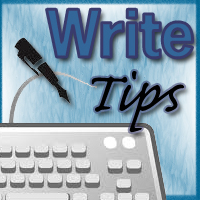
Although I’ve gotten really good notices for my debut novel, The Worker Prince, I did get some criticisms. Among them were comments suggesting I could have been more innovative at times. Even the reviewer who listed me Honorable Mention on his Barnes & Noble Book Clubs Years Best SF Releases for 2011 said this. So I challenged myself in The Returning, sequel to The Worker Prince, accordingly. The first book got notices for its complicated plotting. But in book 2, I wanted to step it up a notch and really surprise readers and myself. The fact that I succeeded seems obvious from the fact that as I went back into the manuscript after two months away to edit it, I found myself surprised at plot points I’d forgotten. ‘I didn’t remember doing that! Cool!’ is a good reaction for you to have to your own stuff. It’s even better, of course, when readers react that way. After all, we’re often so close to our own work, we can’t be subjective. Setting aside a manuscript and not looking at it for two months really does help though, but still, the final test remains what will readers/reviewers think?
Not that I’m suggesting we write for readers and reviewers. You can’t do that. But once you put a book out there, that piece of your heart, that part of you, it becomes part of a community who read it, and their interactions with it and responses to it become valid measures of its success, good or bad. That’s all the more reason why taking risks is so vital. We’ve all heard the saying: there’s no new plots, only old ones told in new ways. In Science Fiction and Fantasy, in particular, this is a common quote. And you’ll often find it true. But being original in your basic plot isn’t what gives your book the “Wow!” factor. It’s the approach you take which does that and that’s where risk taking can really pay off.
What are some risks you can take? Here’s a few examples:
1) Kill A Character—we all hate to “murder” our babies. (It’s a good thing to hate, I’m not arguing.) But it’s important to remember, these are fictional beings, not real ones. And sometimes what’s best for the story is what’s worst for them. Bad things have to happen to your characters to keep your story interesting, to raise the stakes. Otherwise, you’re setting readers up for a pretty bland read. So sometimes, killing characters, especially ones readers love, is a great way to add new energy to your story and the character dynamics of those who remain and surprise readers with unexpected twists and turns. In The Returning, the death of characters transforms the story, changing the course of other characters’ lives as well as the conflicts faced by the world itself.
2) Switch Genders—have a character who might fill a traditional role, such as male sidekick to male hero, be female instead or vice versa. You can develop all kinds of unexpected interactions and chemistry from that alone. For example, what if the traditional spiritual advisor to the king in your fantasy was a woman? So often we see that role as a man, a sorcerer or a priest. By making it female, new dynamics come into play. The male/female dynamics which now have a role allow you to examine gender roles in your world. What would the queen or other women think of this woman’s power? How does it affect their relationships? Those are just two examples of the dynamics which might come into play as a result.
3) Use A Non-Traditional Setting—Ken Scholes did this exceptionally well with his Psalms Of Isaak which has a mix of traditional epic fantasy setting elements and postapocalyptic SF elements (swords and bows, blacksmiths, horses, metal men, desert, sand, ruins, etc.) By setting his epic fantasy story in such a milieu, he keeps it fresh and fasncinating, even when familiar elements appear. And the furthermore, the setting encourages risk taking how he uses any traditional elements, including magic.
4) Do The Opposite Of Instinct—if your first thought is to do one thing, search for something else. Often our mind goes to the most familiar or obvious first, but the search turns up more interesting options. For example, in deciding about killing a character, I had to choose between a likable character and one who was more challenging for readers. I chose to kill the likable character because the ideas I had to further develop him were less interesting and his death created all kinds of dynamics for the hero and less likable character to work through. It just made sense. Both of them have dramatic arcs as a result of the death, whereas killing the less likable character would have actually removed tension.
5) Take Unique Approaches To Themes—Especially if you’re using oft-repeated themes (and let’s face it, so many of them are), it’s important to look for a new angle. What hasn’t been done or done the way you do it? Thematic elements add depth and wholeness to your fiction, but they can also be cliche, which makes it important to find ways to infuse your thematic elements with a freshness. For example, the Moses story which inspired The Worker Prince is about slavery, and to me, a big part of that was founded on ideological bigotry, so when I wrote the book, even though my main goal was to provide a rip roaring old fashioned space opera adventure, I worked in themes dealing with ideological differences and used real world religion as an example of how our own egos can lead us to judge ourselves better than those who don’t share our ideals. It can be a very subtle thing we don’t even realize we’re doing. But what if we did it so much it became normal and grew larger and larger? Could we really believe others are not equal to use as human beings as a result? Would we actually enslave them? It’s an approach I hadn’t seen taken to the story before, and so far reader response has been positive. Ironically, using Christianity as a real religion in my book, even though it’s not preachy or trying to push religion on anyone (their words) was a risk. I’ve had a few people who shy away from the book because of it. Ironically, those people often admit if I’d written it as Christianity but called it something else, they would have been fine. So there’s two examples of risk in regards to themes. (For more on Themes, click here.)
I’m sure you can think of plenty of other examples. Please share them the comments so we can all learn.
My point is that risks are what keep your writing fresh and unpredictable not just for readers but for you. And the result of having to make risky or unexpected choices is being led to unexpected places in your character arcs and plotting. These, in turn, pull more out of you and push you in ways you’d never have been pushed. The result is a better book and you becoming a better writer. Recently I saw a friend’s debut novel get slammed by some reviewers who focus on fantasy. The reason? They said it was too much like what they’d seen before; too predictable; not risky. I’ve read the book and enjoyed it far more than they did, but how would you feel if this happened to you? I’m sure my friend’s next book will be far riskier in many ways. The reviews will push him to strive harder and think more about his choices and the result will be a better book.
We all have room for growth in our journey as writers. Where should you be taking more risks? When are you going to start? Beginning 2021 by taking some risks would be a great way to start, wouldn’t it? For what it’s worth…
 Like it or not, networking is a necessity for anyone who wants to succeed in the arts. And given so many creatives are introverts that makes networking a big challenge. But as someone who considers networking a key element in my career success so far, I have learned a few tricks I can pass on to make networking easier.
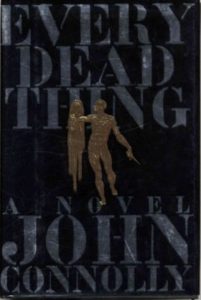 Charlie Parker by John Connolly—Written by an Irish author, this series tells the story of a private detective in Maine, after the death of his beloved wife and daughter, as he not only hunts those responsible but takes on other cases of evil actors plaguing his community. Noir, with incredible prose, well drawn characters and settings, and a touch of supernatural, this is simply one of the best written detective series being written today. And a major influence on my own writing.
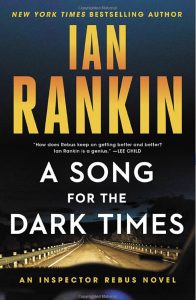 Rebus by Ian Rankin—The story of a Scottish police inspector, John Rebus, this story has rich settings and characters as Rebus probes criminal cases in the Scottish underworld around Edinburgh. Dark, noir, and intense with great procedural accuracy and depth, this series is one of the top selling detective series in Europe for a reason, going on 26 books strong to date with more to come. Michael Connelly of Bosch cites this series as one of his inspirations for creating Bosch and it’s certainly one of mine.
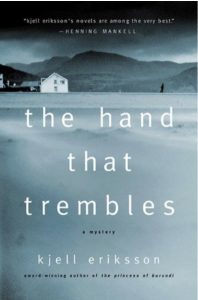 Ann Lindell by KJell Eriksson—this Swedish set series follows the adventures of a female detective as she investigates the dark underbelly of Sweden’s cities and countryside. To me, this one has a similar feel to Wallenberg and the TV series Shetland in many ways, though its richly drawn characters and setting are uniquely told and the female protagonist offers a different perspective than many of the male leads on this list.
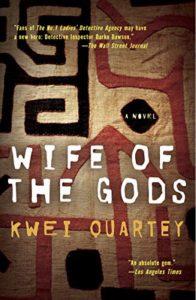 Darko Dawson by Kwei Quartey—A Ghanaian American author, Quartey’s Darko is a Ghanaian police inspector working in Accra, Kumasi, and other locations throughout the small African country as he investigates murders, rapes, fraud, and much more, revealing a rich, nuanced world and culture filled with colorful characters. One of the few noir series set in contemporary Africa, this one stands out for the uniqueness of its voice and approach, and as one who has spent significant time in Ghana, I can say it truly brings the place to life in a powerful, relevant way.
 Wallender by Henning Mankell—Kurt Wallender, now a TV show starring Kenneth Branagh (Wallender), is a classic Swedish detective working the coast of Sweden south of Stockholm where he investigates a variety of dark cases. He also struggles with relationships—from his adult aged daughter, who is also an aspiring detective, to his ex-wife, lovers, and co-workers. Mankell, now deceased, has written an incredible series of novels and short stories exploring a rich world and fascinatingly real but flawed character.
 In addition to looking at the questions, foreshadowing, plot arcs, and character arcs, don’t forget to also consider emotional arcs. Because good endings satisfy don’t just wrap up the pieces logically and neatly on the outside, they also satisfy our inner selves: our emotions. Donald Maass writes in Writing The Breakout Novel: “Why do endings disappoint? Often it is because they are rushed; that is, because the author has written it in a hurry due to fatigue or due to a looming deadline, perhaps both. Climaxes are both inner and outer, both plot specific and emotionally charged. The payoff needs to fully plumb the depths in both ways if it is to satisfy.” The secret, Maass suggests, is to allow your protagonist the possibility of failure until the very end; maintaining the possibility that he or she can fail. He goes on to say “construct the plot so that its conflicts, inner and outer, all converge at the same time and place…A great storyteller leaves us in suspense right up to the final moments. Success is never sure; in fact, failure seems the far more likely result.” The satisfaction is in the protagonist rising to the moment and somehow overcoming the odds to succeed. Without that, victory is hollow, the ending emotionally unsatisfying and lacking in depth.
 Welcome to a new age in history, the age of COVID-19. Obviously, this is something most of us have never really faced in our lifetimes. And the uncertainty and lack of clear direction from authorities can be unsettling. As the son of medical professionals, I have never been one to panic about getting sick. Oh, I hate it. I dread it, but I don’t walk around afraid of every cough or germ or handshake, and nothing has changed with this new threat. I also grew up believing God is in control and so I tend to believe what’s meant to happen will, and that means if I am destined to get sick, I probably will, so stressing about it isn’t going to get me anywhere. Oh, I can do what I can to avoid it. And take appropriate car and precautions. But losing sleep over it or having emotional upset just isn’t me.